
Introduction to RNA
Ribonucleic acid (RNA) is one of the most crucial molecules in biology, playing a pivotal role in coding, decoding, regulation, and expression of genes. Unlike DNA, which is often seen as the storage unit for genetic information, RNA acts as the intermediary that translates genetic information from DNA into proteins, which are the functional and structural units of the cell.
Structure of RNA
RNA is a single-stranded molecule composed of nucleotides, which are the building blocks of nucleic acids. Each nucleotide in RNA consists of three components:
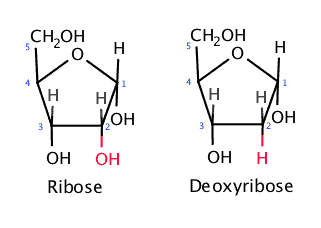
Ribose Sugar: Unlike DNA, which has deoxyribose sugar, RNA contains ribose sugar. The presence of an extra hydroxyl (-OH) group on the ribose sugar makes RNA more reactive and less stable than DNA.
Phosphate Group: This group forms the backbone of the RNA strand, linking the sugars of adjacent nucleotides.
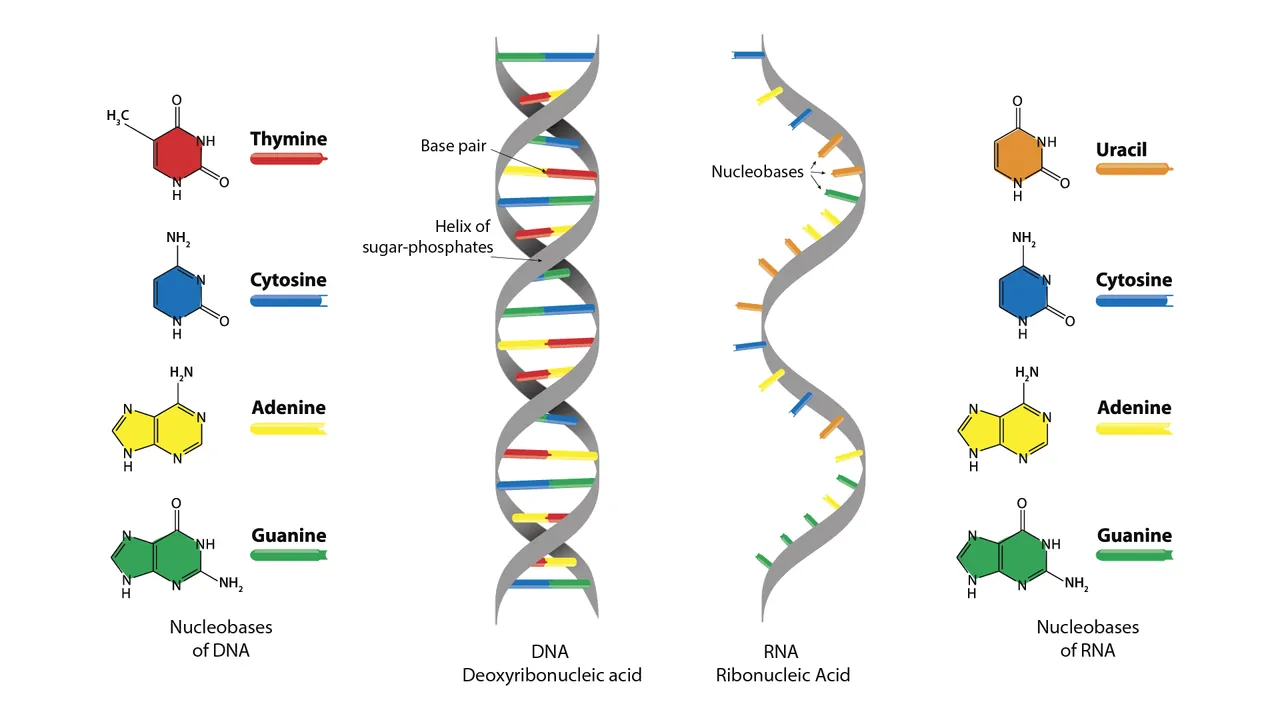
Nitrogenous Bases: There are four types of nitrogenous bases in RNA:
- Adenine (A)
- Uracil (U) (replaces thymine found in DNA)
- Cytosine (C)
- Guanine (G)
The sequence of these bases encodes genetic information, similar to how sequences of letters form words and sentences.
Types of RNA
There are several types of RNA, each with a unique function:
Messenger RNA (mRNA): This type of RNA carries genetic information from DNA to the ribosome, where proteins are synthesized. mRNA serves as a template for protein synthesis during translation.
Transfer RNA (tRNA): tRNA is responsible for bringing amino acids to the ribosome during protein synthesis. Each tRNA molecule carries a specific amino acid and matches it to the corresponding codon on the mRNA strand.
Ribosomal RNA (rRNA): rRNA is a key component of ribosomes, the cellular structures where proteins are synthesized. rRNA helps to catalyze the formation of peptide bonds between amino acids.
Small Nuclear RNA (snRNA): Found within the nucleus, snRNA is involved in the splicing process of pre-mRNA, where introns are removed and exons are joined to form mature mRNA.
MicroRNA (miRNA) and Small Interfering RNA (siRNA): These small RNA molecules are involved in the regulation of gene expression. They can bind to mRNA molecules and either degrade them or inhibit their translation.

Transcription: From DNA to RNA

The process of transcribing DNA into RNA is known as transcription. This process occurs in the nucleus of eukaryotic cells and involves several steps:
Initiation: The enzyme RNA polymerase binds to a specific region of the DNA called the promoter. This region signals the start of a gene.
Elongation: RNA polymerase unwinds the DNA and adds complementary RNA nucleotides to the growing RNA strand, synthesizing it in the 5' to 3' direction.
Termination: Once RNA polymerase reaches a termination sequence on the DNA, it releases the newly formed RNA strand, which then undergoes processing to become mature RNA.
RNA Processing
In eukaryotes, the primary RNA transcript undergoes several modifications before becoming functional:
Capping: A modified guanine nucleotide is added to the 5' end of the RNA transcript. This 5' cap protects the RNA from degradation and helps in the initiation of translation.
Polyadenylation: A tail of adenine nucleotides, known as the poly-A tail, is added to the 3' end of the RNA transcript. This tail also protects the RNA from degradation and aids in the export of the RNA from the nucleus to the cytoplasm.
Splicing: Introns (non-coding regions) are removed from the RNA transcript, and exons (coding regions) are joined together. This process is facilitated by the spliceosome, a complex of proteins and snRNA.
Translation: From RNA to Protein
The final step in the flow of genetic information is translation, where the sequence of bases in mRNA is translated into a sequence of amino acids, forming a protein. This process occurs in the ribosome and involves three main stages:
Initiation: The small ribosomal subunit binds to the mRNA near the start codon (AUG). The initiator tRNA, carrying the amino acid methionine, binds to the start codon.
Elongation: The ribosome moves along the mRNA, and tRNAs bring the appropriate amino acids to the ribosome. Peptide bonds form between adjacent amino acids, elongating the polypeptide chain.
Termination: When the ribosome reaches a stop codon (UAA, UAG, or UGA), translation terminates. The newly synthesized polypeptide is released, and the ribosome disassembles.
RNA in Modern Biology
RNA is not just a passive intermediary in gene expression but also plays active roles in various cellular processes and has become a focal point in modern research and biotechnology:
RNA Interference (RNAi): This is a biological process where RNA molecules inhibit gene expression by destroying specific mRNA molecules. RNAi has become a powerful tool in gene silencing and functional genomics.
CRISPR-Cas9: This genome-editing technology relies on RNA molecules to guide the Cas9 enzyme to specific DNA sequences, allowing for precise editing of the genome.
RNA Therapeutics: Advances in RNA biology have led to the development of RNA-based therapies, such as mRNA vaccines for infectious diseases like COVID-19.
Please, write your suggetions in comment section.
Follow our blogs for more updates and protocols: https://iammolecularbiologist.blogspot.com/
Follow
us on WhatsApp: https://chat.whatsapp.com/I30OdffWlJhGABXsTmKo95


0 Comments:
Post a Comment